The primary success metric for a stablecoin has always been its float – the total issuance, market cap, fully diluted value. That’s because it is the easiest to measure and get an accurate point-in-time report on.
However, for new stablecoins the metric to optimise should be flow, the amount of volume enabled. While the metric rarely drives revenue (often the opposite), it is a leading indicator for adoption – and ultimately float.
Float Reigns Supreme
Float is easy to evaluate. You just call totalSupply() and you have the answer. This largely works universally, except for tokens where large amounts are minted but not “issued”. Consequently, and as legacy of trying to valuate tokens with speculative value through market capitalisation, effectively all (crypto) industry platforms also rank tokens by their supply.
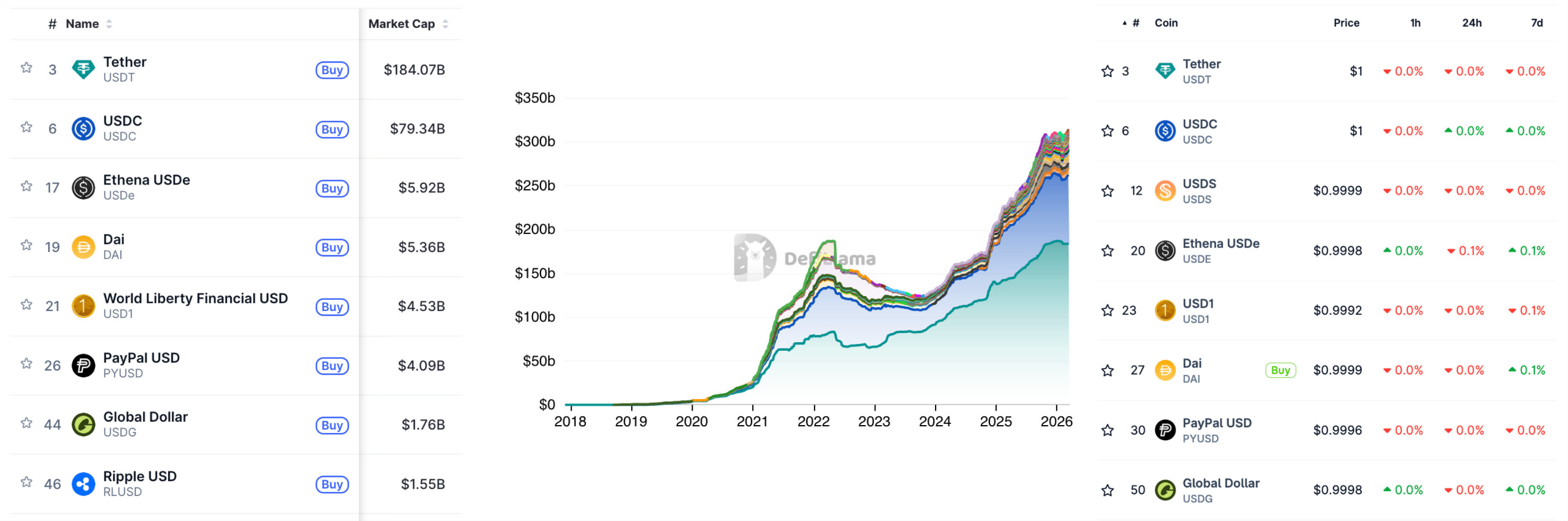 Figure 1: Crypto-native platforms often rank stablecoins by their market cap
Flows are much harder to evaluate; you’ll have to access the full history of a stablecoin to arrive at an understand of its transaction volumes. And may still be inaccurate; centralised venues may use omnibus accounts and track balance attribution internally, leading to the volume not being tracked on-chain. Privacy-enabling protocols like Zama or Hinkal cause, effectively, the same result.
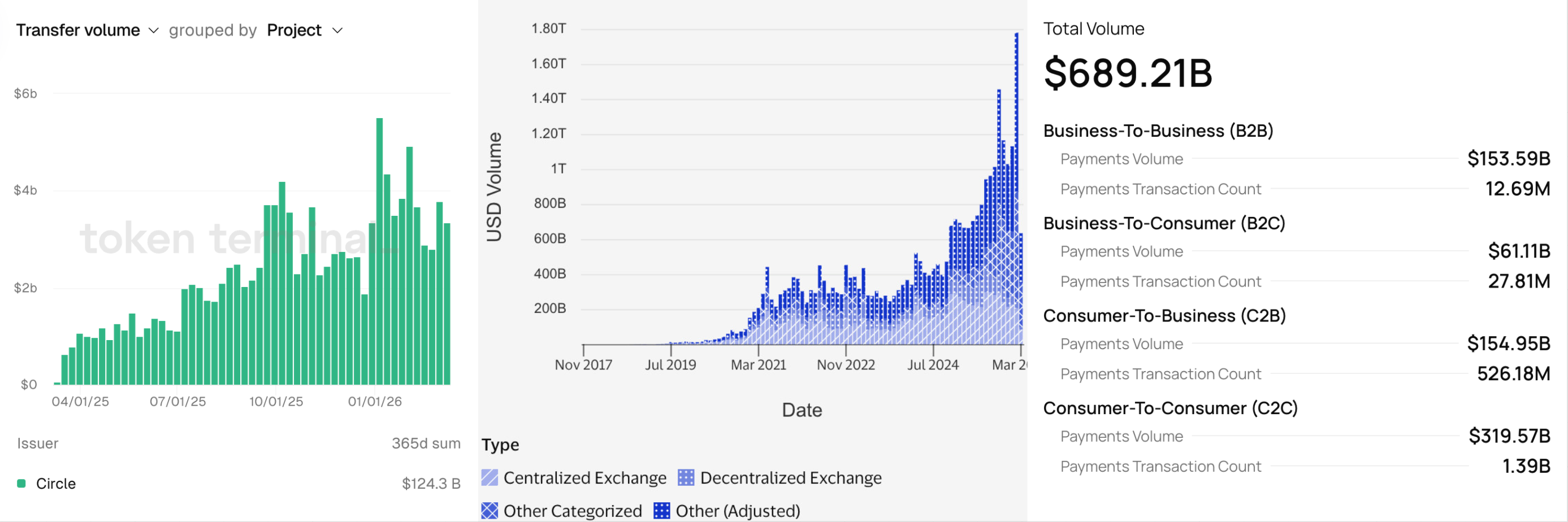 Figure 2: Some newer, more professionally focused platforms have started to analyse flow volumes as well
Float is also a very good indicator of the success of the issuer. Issuer revenues are a direct function of outstanding issuance. But – I argue – float falls short when we try to understand the long-term success, proliferation, and stickiness of stablecoin products.
The Float Trap
Our thinking has been anchored to float. And therefore new stablecoin issuers keep optimising for float. Throwing incentives around to grow issuance quickly. Working with secondary market participants to keep redemption demand low, “netting onchain”, to reduce banking costs.
Mercenary capital chases high yields, rewards, incentives. While this pumps numbers and looks good on paper, mercenary capital also leaves the farms as quickly as it arrives. Optimising for float optimises for the wrong kind of users.
A few venues where your stablecoin is integrated, a few Morpho pools with incentives, and a dozen whales does not drive long-term interoperability or adoption.
New North Star: Flows
I advocate for using flows – the total on- & off-chain transfer volumes – as the new product & business development north star.
Flows are an indicator of acceptance, interoperability, and recognition. Flow also serves as a proxy of stablecoin users, adjusted for the value they contribute to the network.
Metcalfe’s law posits that the value of a network is proportional to the square of the number of nodes: roughly n². One of its widely recognised limitations is the heterogeneous value of each node.
For stablecoins, each participant’s value is a function of their acceptance and holding amount. A flow – a stablecoin transfer – between two nodes is indicative of economic value accruing to both parties. Crucially, a flow of a certain size reveals that both sender and receiver are capable of transacting at that value: if €1 million is sent, both parties must have (or have had access to) at least that level of net worth or liquidity in the stablecoin. This embeds meaningful economic weight into each connection, far beyond simple node count.
Because the flow data captures both the amount held/accessible by the parties (their economic capacity) and the existence of accepting counterparties, it is superior to pure supply and holder data.
I therefore posit a new formula for stablecoin network value: roughly (∑v)², where ∑v is the sum of the volume of all real economic transfers. This better accounts for heterogeneous node values, as larger flows signal higher-capacity, more valuable connections.
Why Flows?
Beyond the points above, flows are a leading indicator of adoption – at least more so than float.
When we think about the new marginal participant in a stablecoin network, they are more likely to care about the number of nodes they can transact with in feasible size, versus the total size with which they could transact with an infeasible number of nodes.
While float measures the total issuance, it does not measure potential connections within a network. If 1000 users hold €1000 of a stablecoin but are not connected – i.e. belong to discrete, non-overlapping populations – the stablecoin is unusable, even if its float is €1m. However, if we have 100 users who have each transacted with at least one other user with €100, the populations must, at least partially, overlap. These users have captured value from the network.
As per the aforementioned stablecoin network value formula, the value of the €1m float stablecoin is effectively 0 (no meaningful transfers). The transacting network has a value of (100×100)² = 100m, but the key is the connectivity and capacity revealed.
If I’m thinking which stablecoin to hold, regardless of the theoretical value calculation, I will likely choose the latter network. Except if I’m yield farming and the former provides higher incentives.
These network effects can be observed both in- and outside of crypto ecosystems;
- USDT is more prevalent in emerging economies and USDC is more used across Western countries, implying two different geographically separated networks. If I’m paying a friend in Europe, I’m more likely to use USDC than when paying a friend in Nigeria.
- Uber dominates in the West, Grab in SEA. I don’t take an Uber in Singapore even though its market cap is 10x of Grab’s.
- If my local laundromat accepts payments on Solana, I’m not going to pay them on Ethereum because its market cap is 6x larger.
The Bottom Line
New stablecoins that chase flows first will build something real, sticky, and usable. They will prove acceptance, interoperability, economic connections, and meaningful capacity among users. The float will come later. The float will also be far more defensible and sticky because it’s anchored to actual value transfers.
Optimising purely for float is easy and leaderboard-friendly but ultimately fragile. Optimising for flows is harder, requires real product-market fit (and most likely supporting infrastructure/products beyond just mint/redeem infra), and shows up slower but it is the path to building the next category-defining stablecoin that actually gets used as money.